Part of: Paying in Vietnam
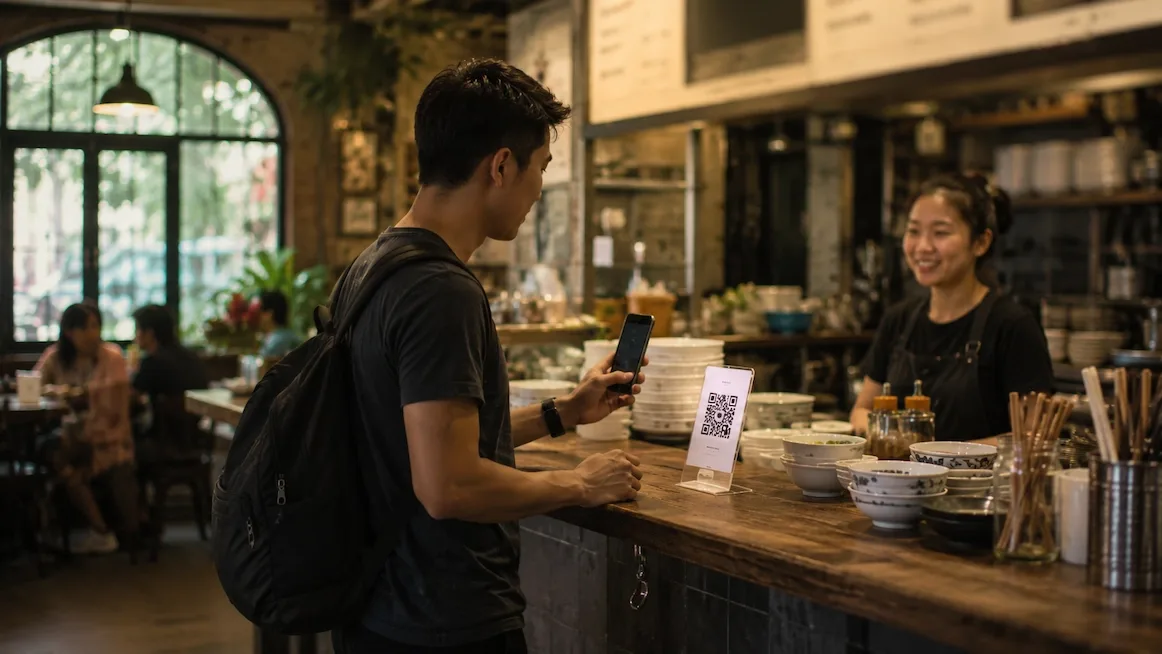
Your first cà phê sữa đá in Saigon comes with a small test: the bill. There’s a QR taped by the register, the woman ahead of you pays with two taps of her banking app, and your foreign card suddenly feels like the wrong tool. The city is mid-sprint from cash to QR, and a visitor lands somewhere in the middle of the race.
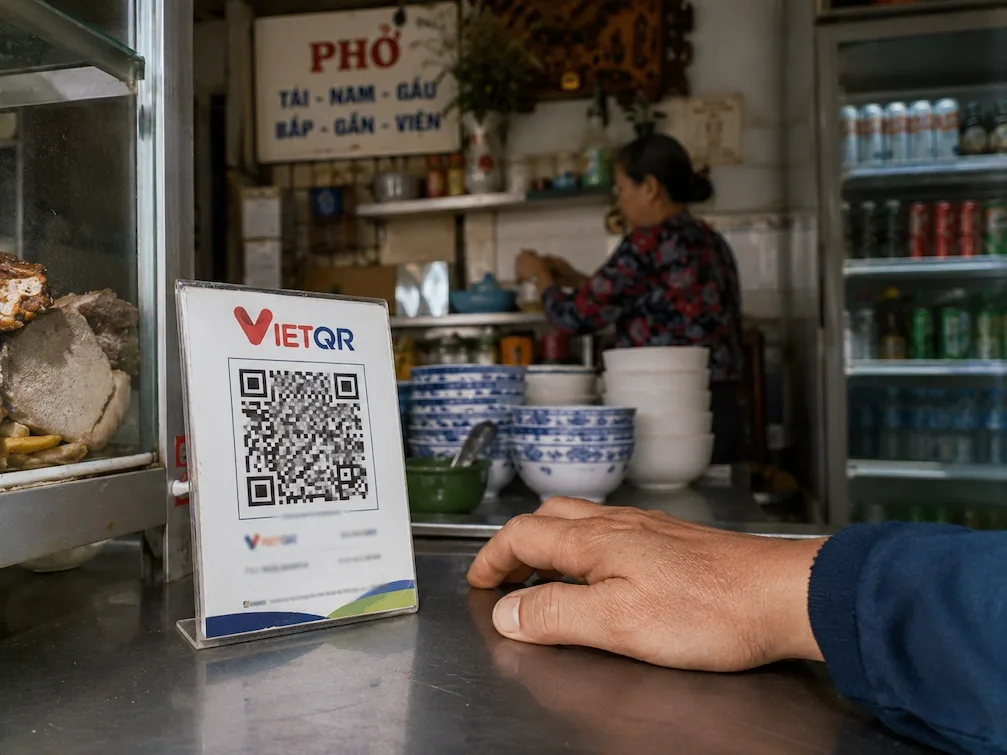
Money here comes in two forms. Đồng, the cash, still rules the street stalls, the markets, and the older shops; any ATM will hand you some. The QR on every counter is VietQR, a national bank-transfer standard, and locals pay for nearly everything by scanning it from a banking app. The catch for a visitor is that VietQR is wired to Vietnamese bank accounts, so a foreign app usually can’t just point at it. So keep cash on you, keep a card, and check what’s live in the app before you count on anything specific.
Pay in three taps
Top up before you need it
Where this is available, load stablecoins (USDC/USDT) into the app while you still have wifi and a clear head, ideally before you're at a counter with a line behind you. You're filling the tank, not making the payment.
Find the QR that is already there
The VietQR code the shop taped up for locals is the one you point your phone at. There's no special terminal to hunt for, and the owner doesn't have to install or change a thing.
Scan, check the amount, confirm
Scan, read the đồng amount back to yourself, then confirm. On the shop's side, a licensed local company pays them in đồng. This is where-available and subject to local rules, so check current coverage in the app before you count on it.
Underneath, the setup is simpler than it sounds, and it’s the part worth trusting: the balance is yours. Yodl is a wallet you control, so nothing moves until you approve it on your phone. You’re not opening an account with anyone. You’re carrying your own money in a form that travels well, and deciding, scan by scan, when it becomes đồng on a shop’s side of the counter.
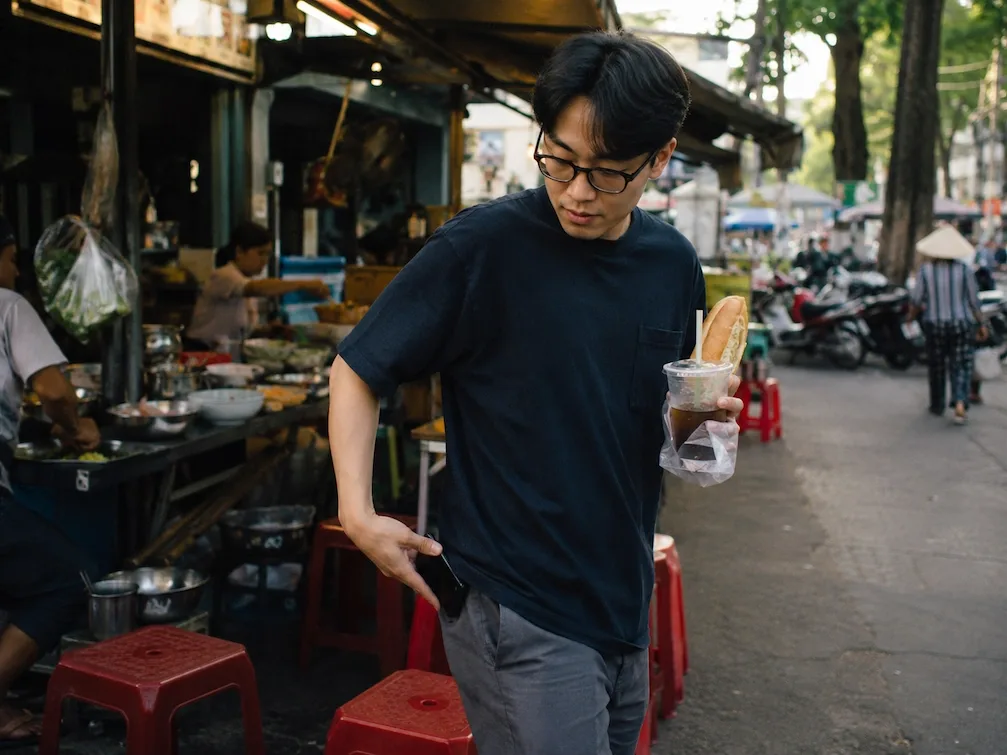
“Saigon's real point of sale is the QR taped to the counter. The đồng in your pocket is for the alley.”
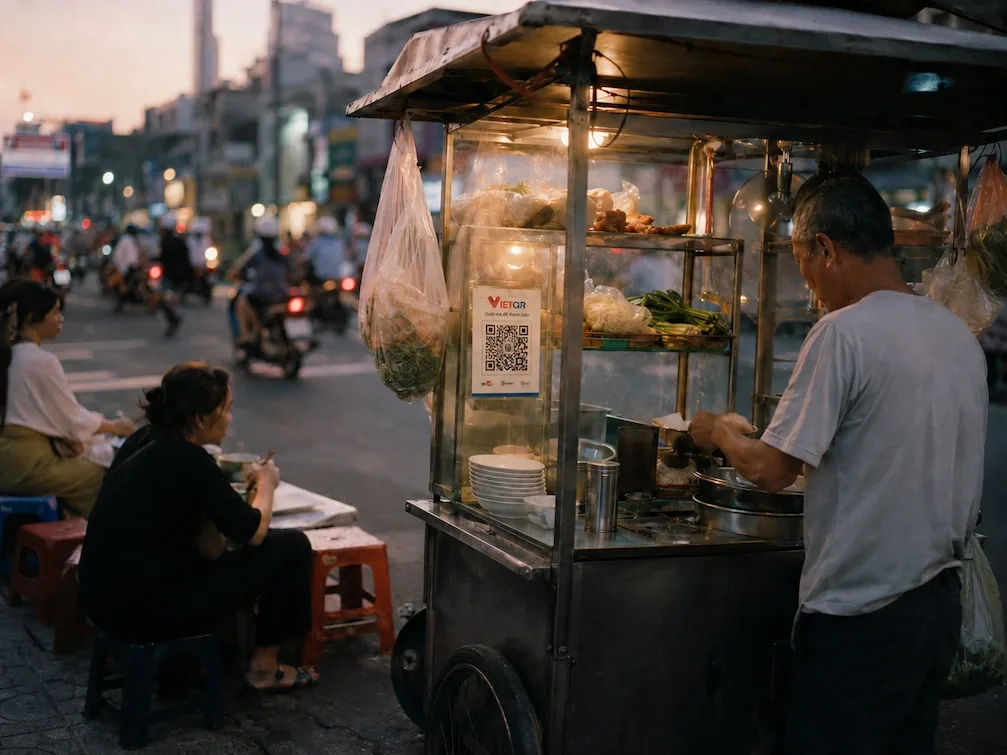
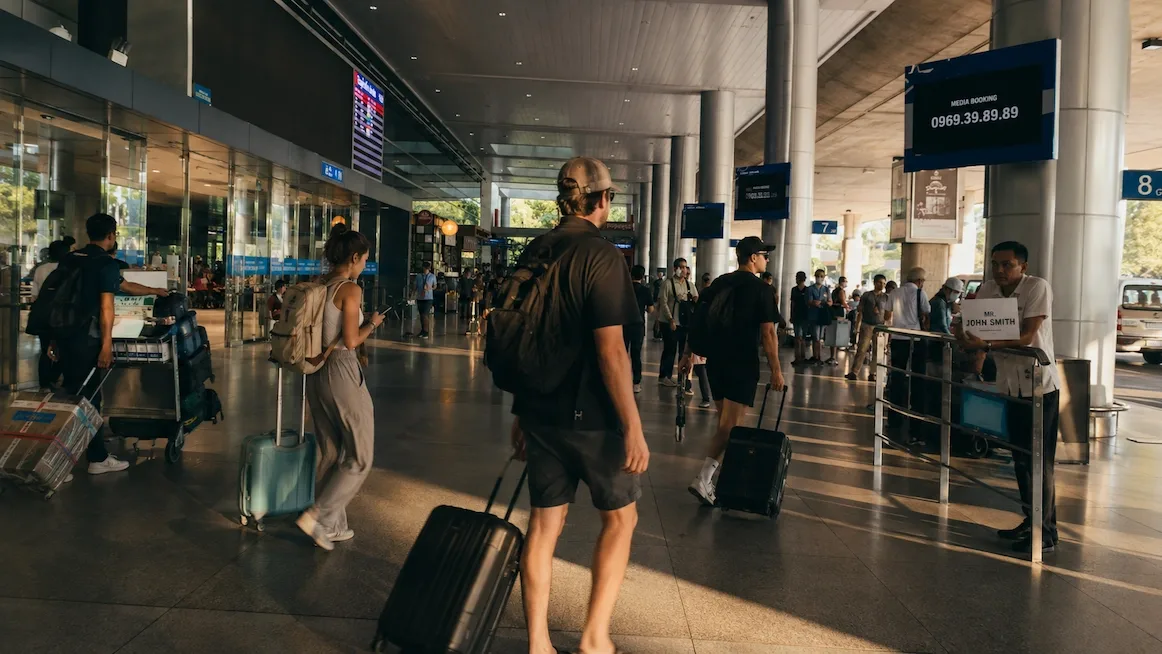
Keep the đồng habit either way. The alley bánh mì cart, the market aunties, the parking attendant with the laminated price card: cash keeps Saigon’s small economy moving, and joining it is half the fun of eating here. Most travelers end up with the same mix: QR where the counter shows one, paper everywhere smaller, and a card in reserve for hotels and the airport.
And the standing rule for Vietnam, worth repeating because it does the real work: check what’s live in the app before you build a day around it. Coverage moves, rules move, and the app is the honest record of what works this month. Plan on cash and card as your floor; treat everything above that as a bonus you confirm first.
How it works, where available
The ledger below runs one sample lunch both ways, and the shape matters more than the digits. The card path pays your bank first, through the rate it picks and the fee it adds. The stablecoin path, where it’s live for you, skips that middle layer. That’s the whole idea. What varies in Vietnam is the where and the when, which is exactly what the app is for.
A $50 lunch, two ways
Sample · verifyWhat a day costs
What a day costs
Sample · verify| Item | Cost |
|---|---|
| Coffee | Cheap |
| Lunch | $50.00 |
| Dinner for two | — |
| Taxi across town | Cheap enough to stop counting |
| Coworking day-pass | — |
Common questions
Should I bother getting Vietnamese cash?
Yes, and more of it than most cities ask of you. Pull some đồng from an ATM early and keep it on you. Cards and apps cover more than they used to, but street stalls, markets and small cafés still run on cash, and nothing says tourist like fumbling for a card at a bánh mì cart. The split most travelers land on is a card or app where a counter shows one, and paper everywhere smaller.
Do I need to tip?
Not by custom. Tipping isn't part of everyday life in Vietnam: the street stall, the cà phê sữa đá, the GrabBike all come without an expected extra, and nobody hovers for one. In tourist-facing restaurants and hotels a small tip for good service is appreciated but never assumed. If you want to say thanks, rounding up or leaving the small notes is plenty.
What happens when I scan, where it's available?
Where it's live for you, you point the app at the VietQR the shop already has on the counter, read back the đồng amount, and confirm; a licensed local company pays the shop in đồng. There is nothing new for the owner to install. Coverage and rules move here, though, so check what's live in the app before you build a day around it.
Who holds my money, the app or me?
You do. Yodl is a wallet you control: nothing moves until you approve it on your phone, and you aren't opening an account with anyone. Your money stays yours, held as stablecoins (USDT) in a form that travels well, and it only becomes đồng on a shop's side of the counter when you decide, scan by scan, where that is available.