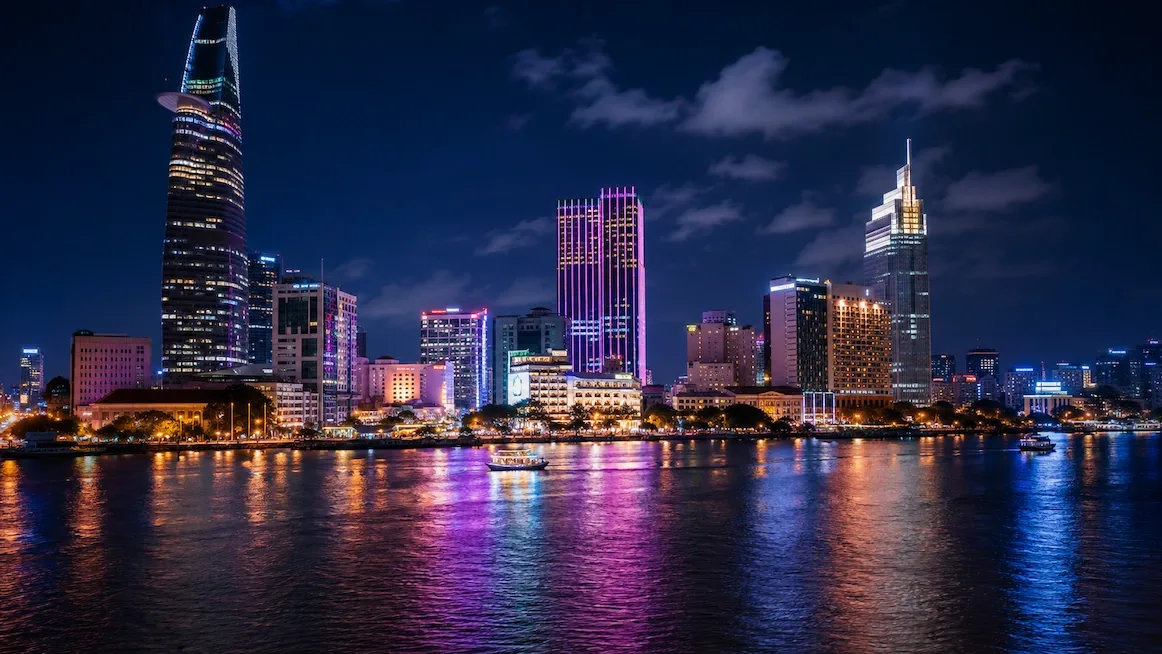
Live market · Yodl Vietnam · field guide
Paying in Vietnam
Saigon runs on motorbikes, iced coffee, and a QR code taped to every counter. How to land, get around, eat well, get work done, and pay for things. VietQR is nationwide, so the app gives you access to the same QR system across Vietnam, well beyond Saigon.
01 · Arrive
Wheels down, into the city
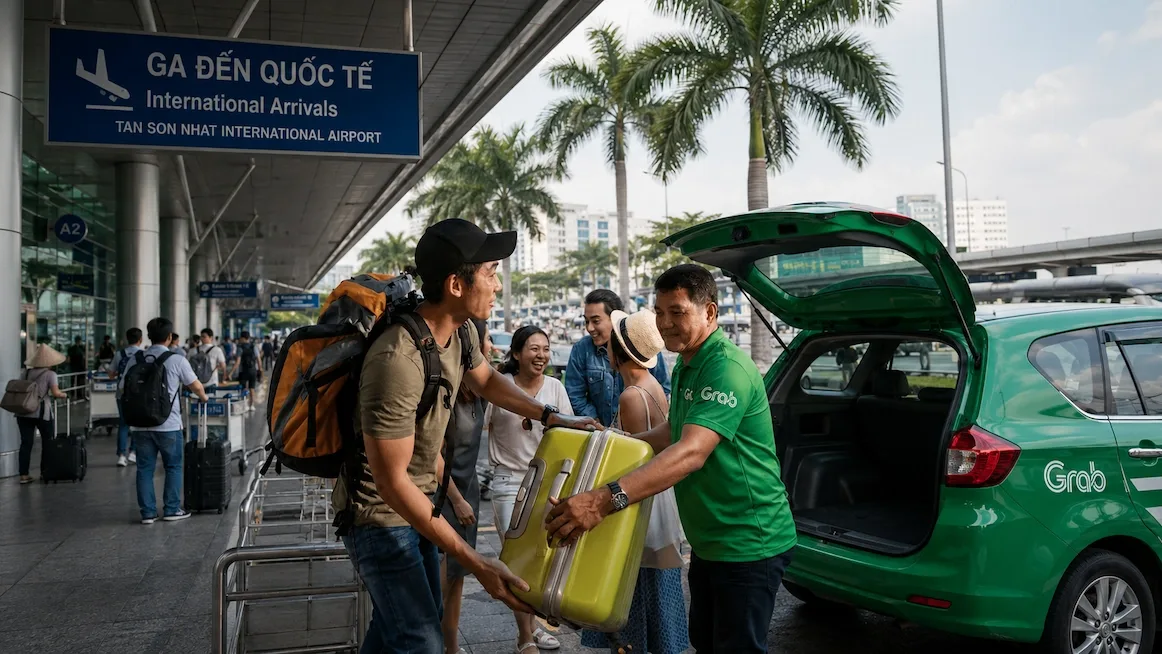
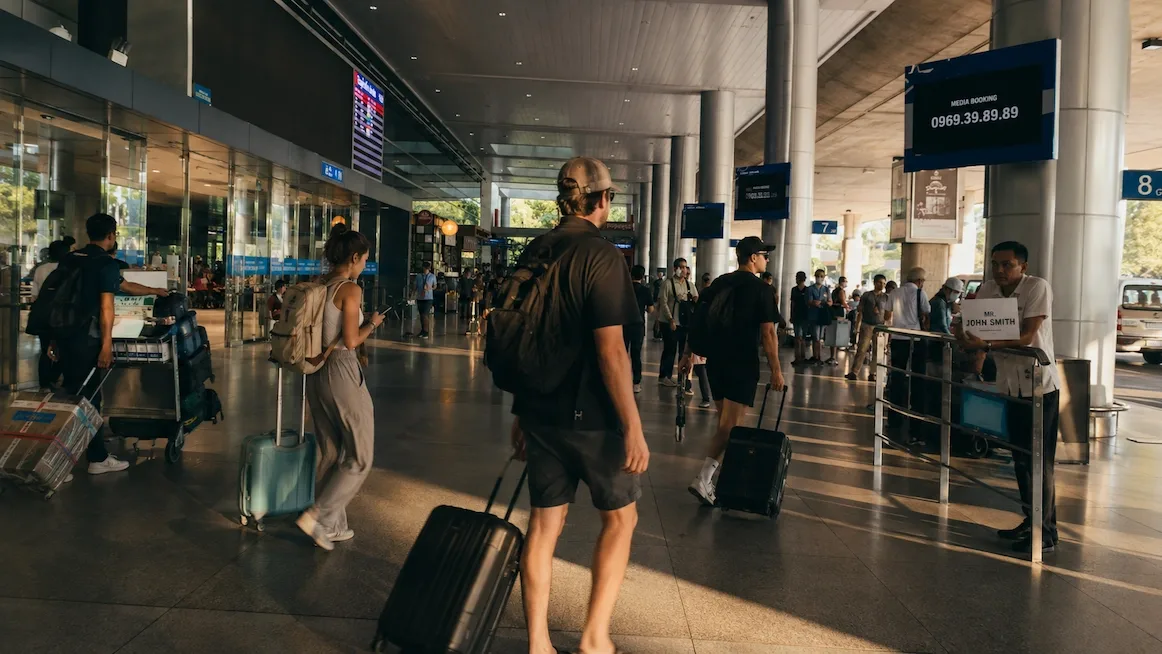
Tan Son Nhat sits about eight kilometers from the center, so the ride in is short: 25 to 45 minutes depending on traffic. Ignore the touts at the door; either line up for a metered taxi (Vinasun is white, Mai Linh is green) or order a Grab from the green pickup boards so the price is fixed before you get in. Set up your data before you land with an eSIM (Viettel and Vinaphone have the best coverage), because you will want a working map the second you step outside. Grab bills your card, so you can get to your bed without a single đồng in your pocket, then pull cash from an ATM once you've landed.
02 · Get around
One metro line and a million motorbikes
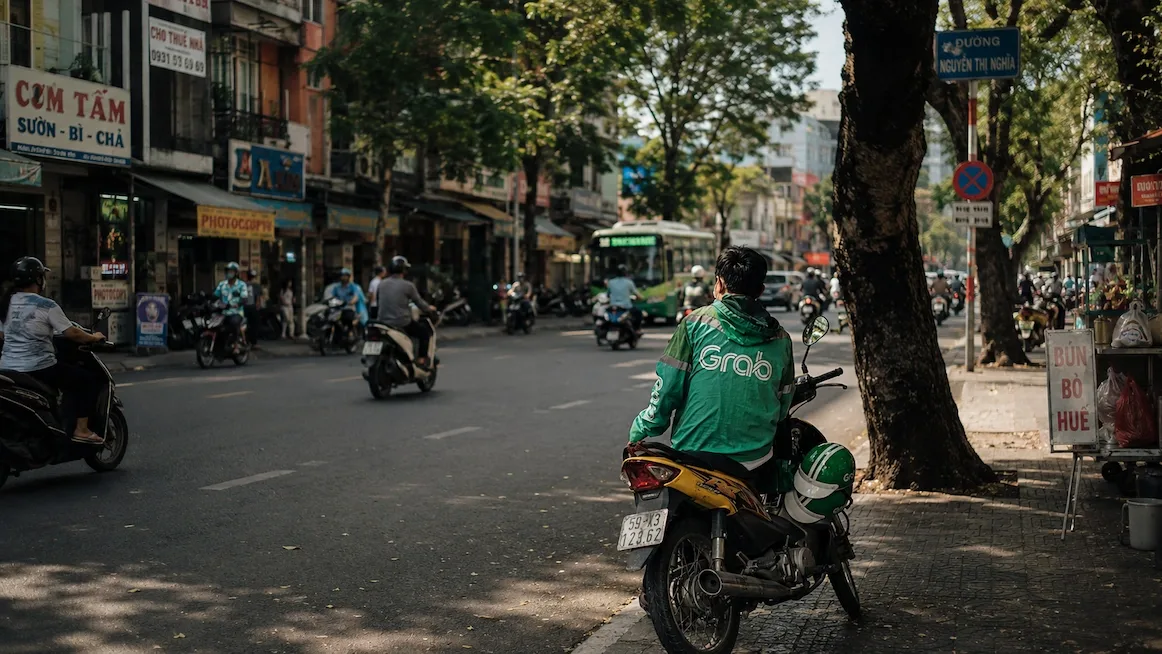
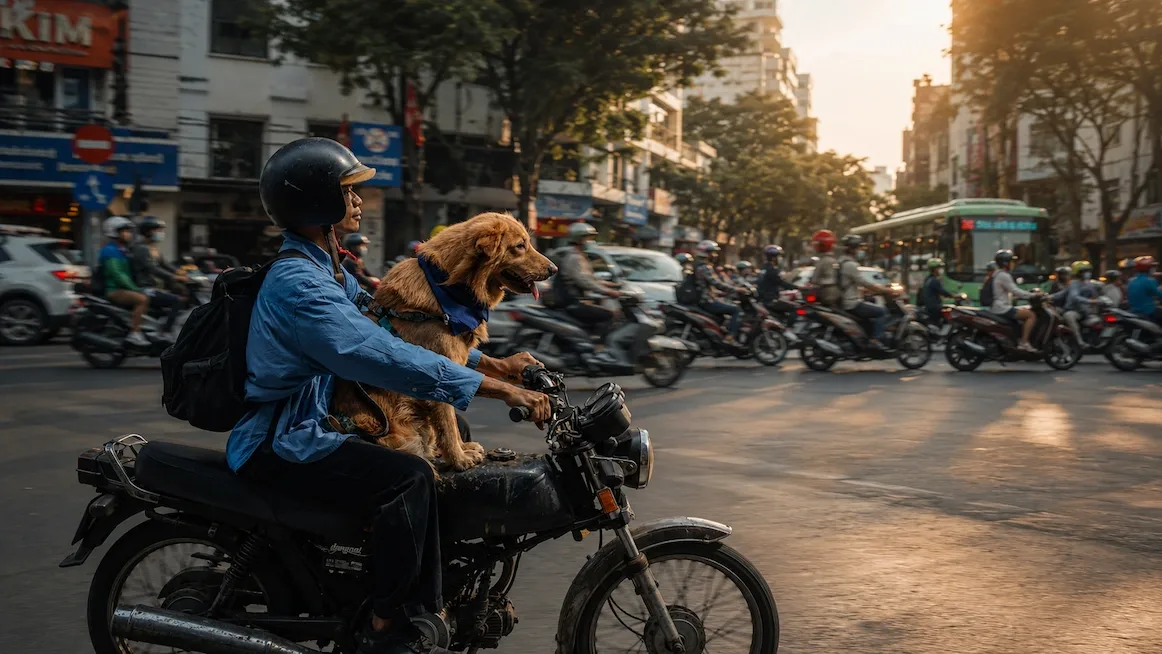
Metro Line 1 (Ben Thanh to Suoi Tien) finally opened at the end of 2024: one clean, cheap, air-conditioned line that is brilliant if you're going where it goes and useless if you're not. For everything else it's Grab; a GrabBike on the back of a motorbike beats a car through traffic and costs less. You tap a bank card or Apple Pay straight at the metro gate. The center is walkable in theory and brutal in the midday heat, and crossing the road is a real skill: walk slow and steady, and never bolt.
03 · Money & paying
Đồng, the QR, and the fine print
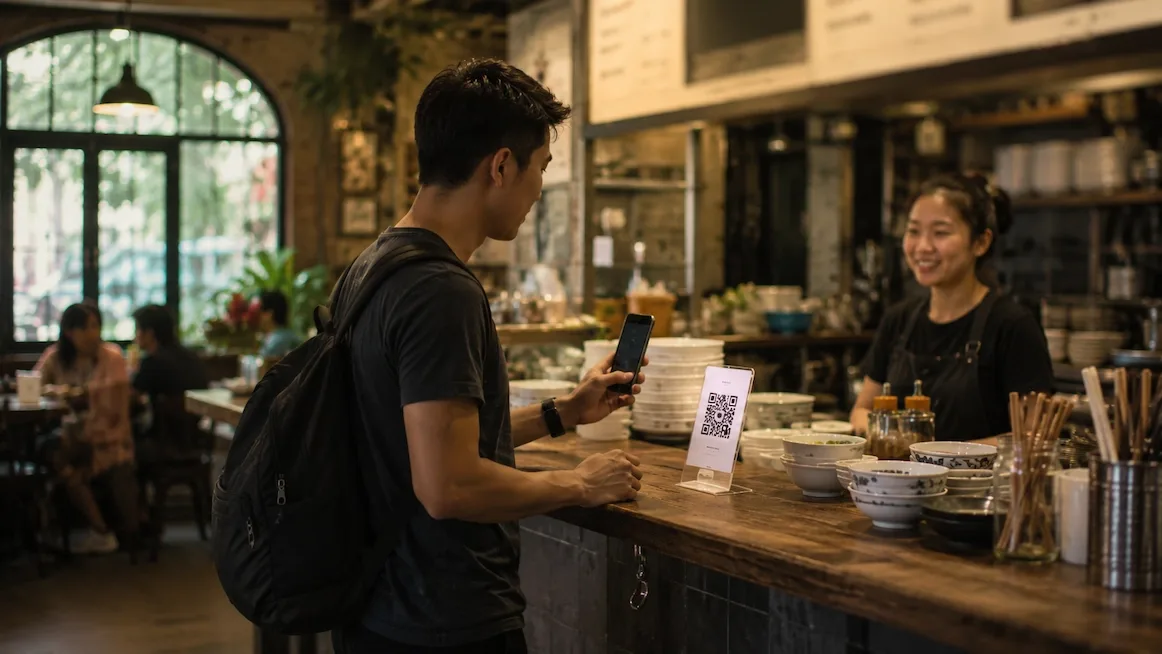
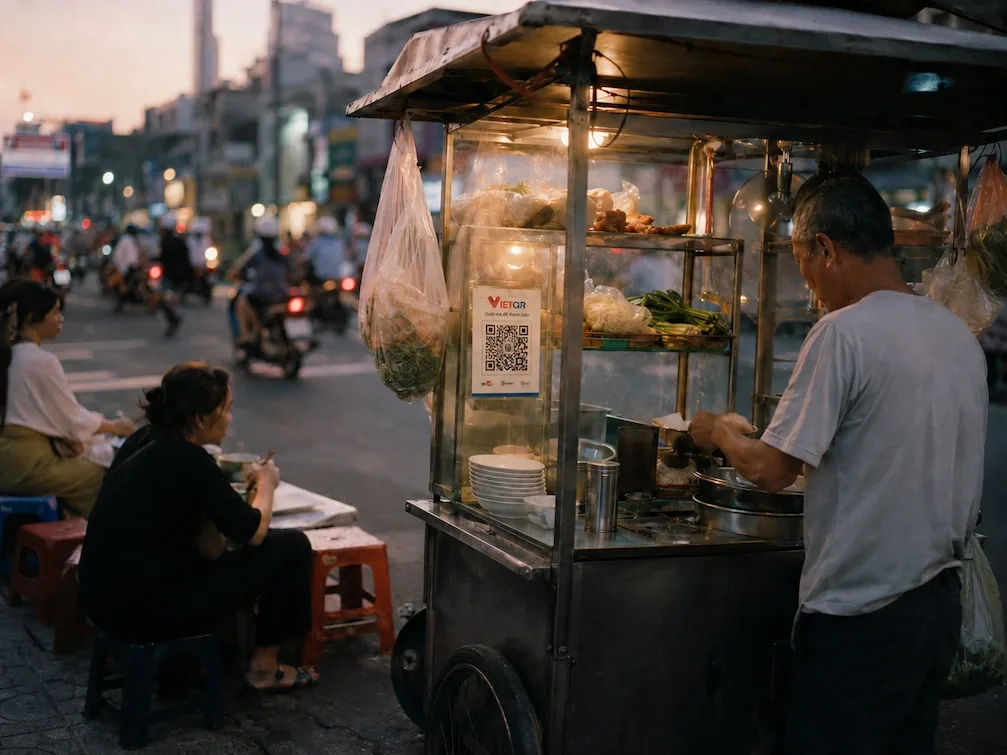
Cash still runs this city, especially in markets and older shops, so always keep some đồng on you. But the thing you'll notice is the QR code taped to every counter: that's VietQR, a bank-to-bank transfer standard, and locals pay for everything from a bánh mì to a bar tab by scanning it out of their banking app. The catch for visitors is that VietQR is wired to Vietnamese bank accounts, so most travelers still fall back on cash, a card, or an app. Check what's live in the app before you count on any one method.
The app we keep coming back to is Yodl. The idea is simple: you hold your money as stablecoins (USDC/USDT), you scan the same VietQR the shop already has on the counter, and a licensed local company pays the shop in đồng on the other end. In Vietnam specifically, what's live for travelers varies, so check what's live in the app before you count on it.
A $50 lunch, two ways
Sample · verify04 · Eat & drink
Eat on a plastic stool, and eat early
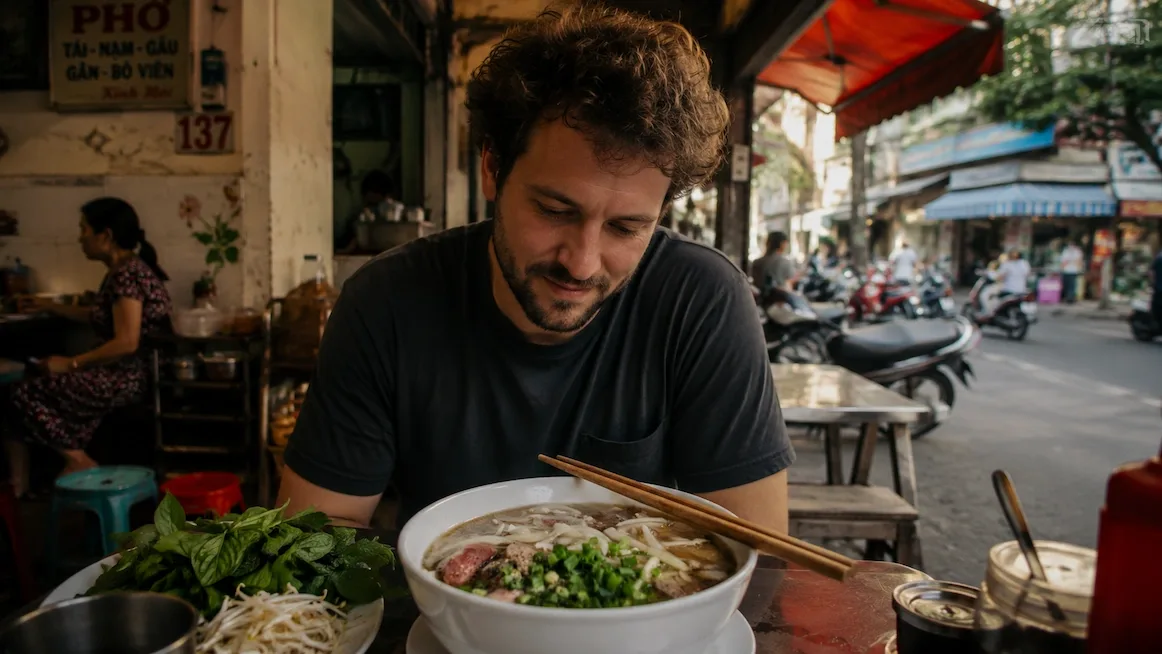
Saigon eats on tiny plastic stools in the alleys (the hẻm), and the food is better for it. The city dish is cơm tấm, broken rice with grilled pork, and the bánh mì here is the original; both are breakfast and lunch food more than dinner, so eat when the locals do, which is early. Coffee is its own religion: order a cà phê sữa đá, iced coffee cut with condensed milk, and nobody will mind if you sit for three hours. Finding the good stuff is simple: if a stall is mobbed with Vietnamese office workers at noon, that's your answer.
05 · Work
Fast wifi, cheap coffee, easy days
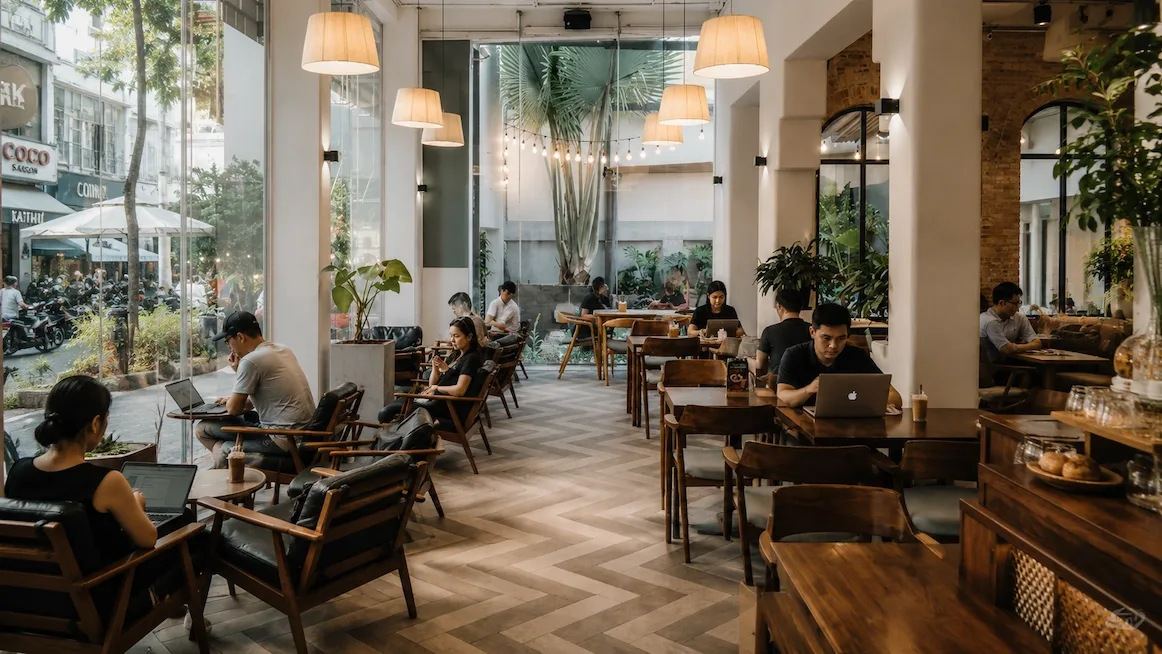
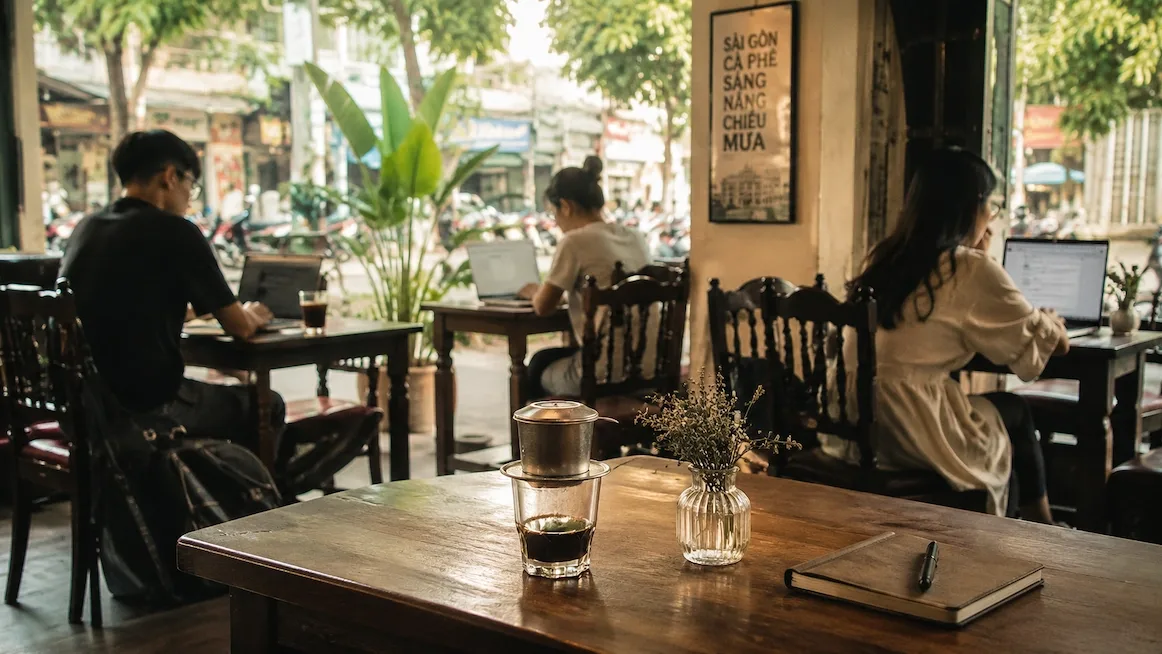
This is one of the easiest cities in Asia to get work done. Fiber is fast and cheap, cafés are built for laptops (one iced coffee buys you a table for hours), and there's a real coworking scene (Dreamplex, The Hive, Toong) alongside laptop-classic cafés like The Workshop. The timezone is GMT+7, same as Bangkok: a comfortable overlap with Europe in your afternoon, and a rough one with the US. District 1, District 3, Thao Dien and Binh Thanh have the densest clusters of places to sit and type.
06 · Neighborhoods
Pick your district
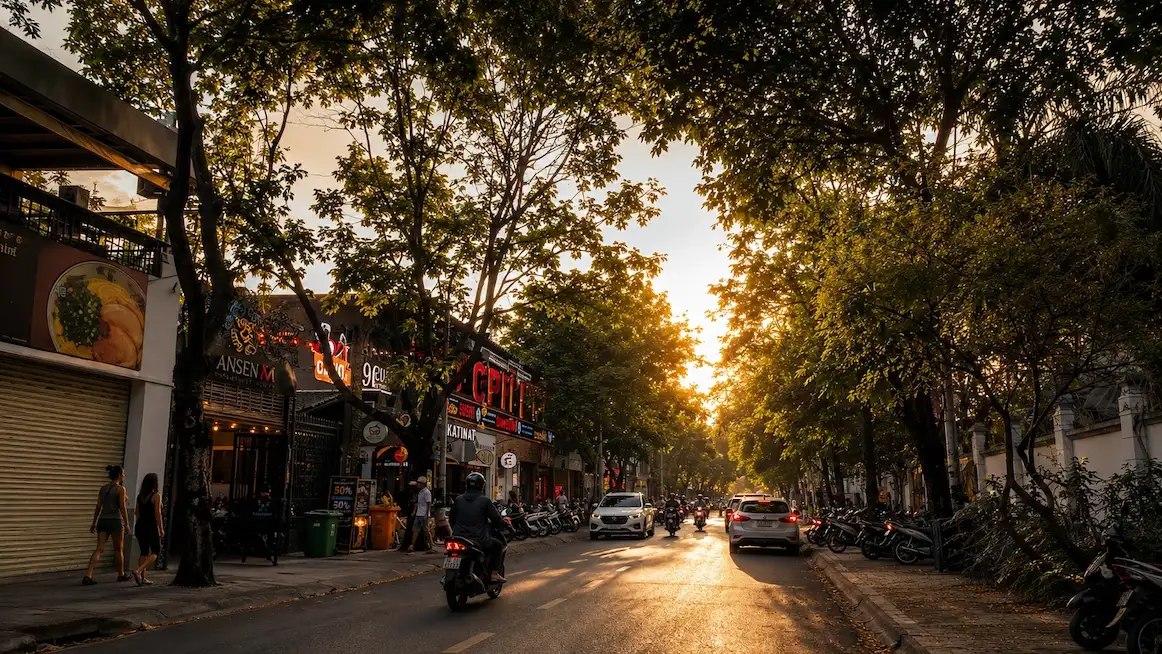
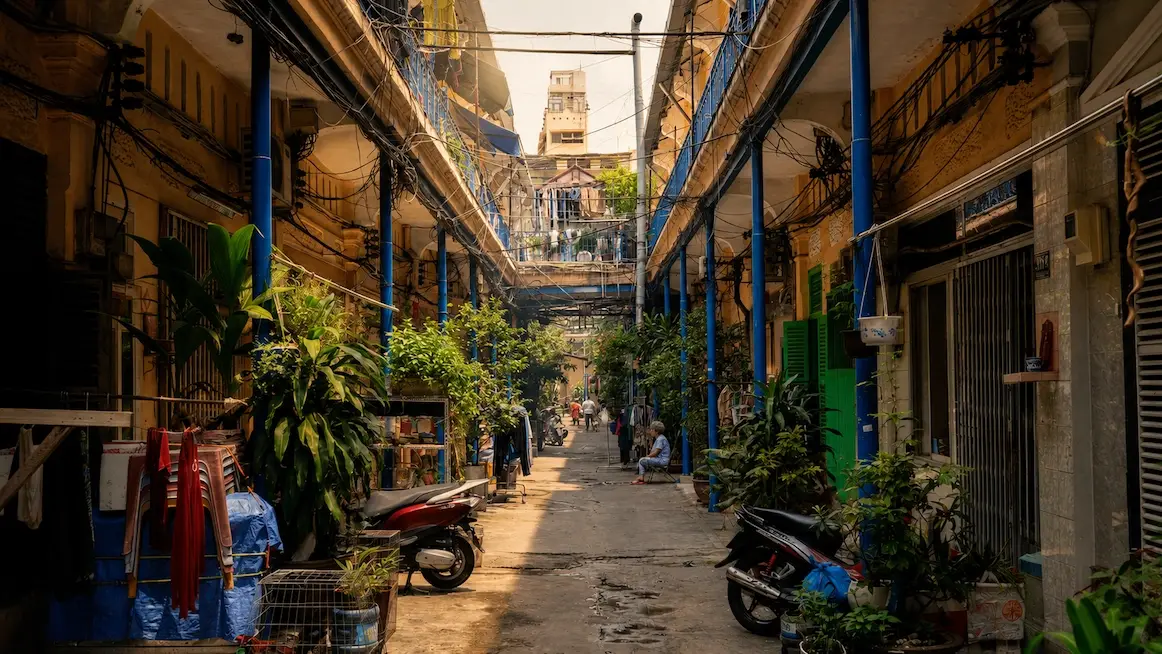
District 1 is the center of gravity: everything is there, and it's also the loudest and the priciest. District 3 is the smarter play for a lot of people, colonial streets and a calmer feel, still walkable into D1. Thao Dien, across the river in District 2, is the leafy expat bubble of cafés and western food and quiet, but you'll spend more on Grabs into town. Binh Thanh, around the Landmark 81 tower, is the rising middle ground, while Phu Nhuan and District 7 skew more local and residential.
The directory
Places we actually go
- Pick$$
Cuc Gach Quan
Grandmother-style Vietnamese in a restored French villa down a quiet alley; the cooking is deliberately plain and the room does half the work. Book ahead and order family-style to share. Portions run small, so you're paying for the setting as much as the plate.
Eat · Tan Dinh, District 1
- Alt$
Banh Xeo 46A
A banh xeo institution pushing eighty, still frying its giant turmeric crêpes over charcoal. Wrap the pieces in herbs and rice paper yourself, go for a late lunch, and bring cash.
Eat · Tan Dinh, District 1
- Pick$$
The Workshop Coffee
The original serious-coffee room in the center: an upstairs hall with cathedral ceilings, an in-house roast, plugs everywhere and steady wifi. It fills by mid-morning, so come early if you want a window seat and a full day out of it.
Coffee · District 1
- Skip—
Ben Thanh Market
The postcard market that's now mostly marked-up souvenirs, pushy stalls and tourist prices. Colorful for ten minutes, a hard sell after. Walk through once for the photo, haggle hard if you must buy, and eat at the street stalls outside instead.
Do · District 1
Curated and opinionated — the list grows as we go, and gets fixed the moment a reader tells us it changed.
Every guide, one place
The Vietnam guides
Start here · Anchor
How to pay in Vietnam as a traveler
Cash in one pocket, a QR on every counter. How paying works in Saigon, what a visitor can join in on, and the cleaner way to carry money, where it's available.
Vietnam
Saigon
Field guide
Landing in Ho Chi Minh City
Field guide
Getting around Ho Chi Minh City
Field guide
Working from Ho Chi Minh City
Field guide
Ho Chi Minh City neighborhoods
Da Nang

Vietnam, answered
The short version. Everything else is in the guides above.
Can I get by without cash?
Increasingly, but not entirely. Grab and bigger places take cards, the local default (VietQR) is bank-account-based and awkward for visitors, and small stalls and markets still want đồng. Carry some cash, keep a card as backup, and don't assume any one method works everywhere.
Do I need Vietnamese to eat well?
Not at all. The best food here is at plastic-stool stalls where you point at what looks good, and half the joy is doing exactly that. Learn a couple of dish names, cơm tấm, bánh mì, cà phê sữa đá, then follow the office workers at noon and eat where they line up.
Is the metro worth it?
For the one route it runs, yes. Metro Line 1 opened at the end of 2024, from Ben Thanh out through Thu Duc toward Suoi Tien, and it's clean, cold, and cheap, a real break from the heat and the traffic. It's brilliant if you're going where it goes and beside the point if you're not. For everything else, a GrabBike is still the city's default.
Do I need a Vietnamese phone number?
For the apps, effectively yes. Grab, Xanh SM and the delivery apps verify a phone number when you register, and a foreign one often won't receive the code. The easy fix is an eSIM that includes a local Vietnamese number, set up before you fly. After that the ride and food apps behave exactly as they do at home.
Know how money works in Vietnam.
Hold stablecoins, learn how locals pay, and check what's live before you lean on it.