Part of: Paying in Vietnam
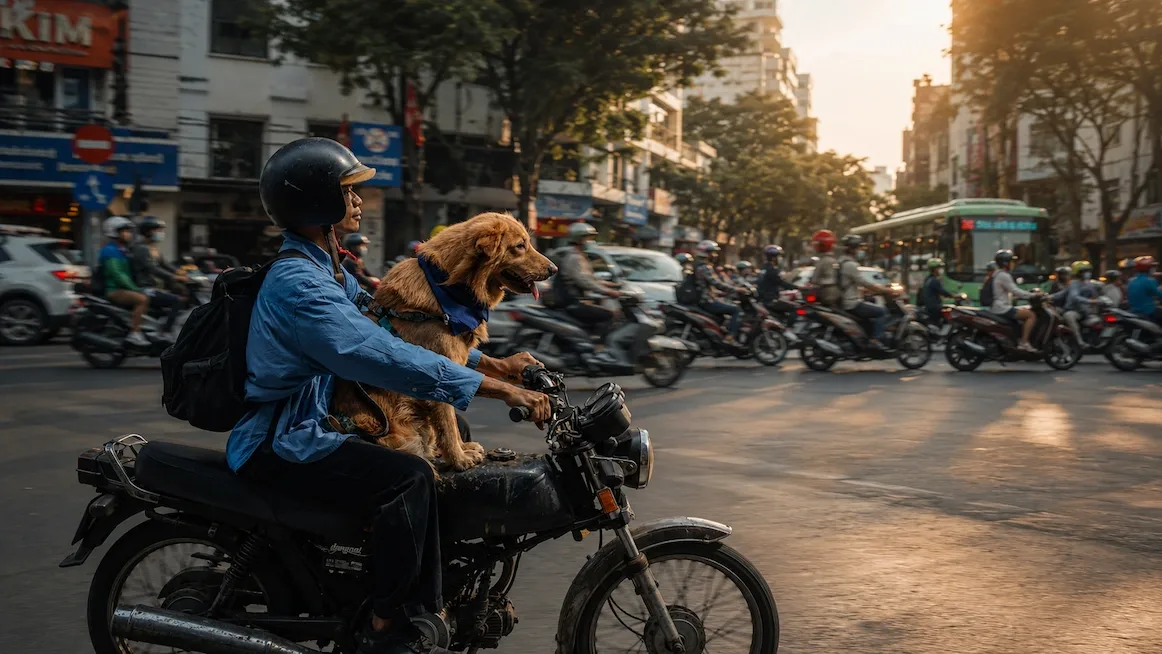
The traffic looks like chaos and mostly isn’t. A whole city of motorbikes moves with a logic you’ll pick up faster than you’d think, and once you stop flinching at intersections the place gets a lot smaller. You don’t need to rent a bike or decode a bus map. You need two apps, one metro line, and the nerve to cross the street.
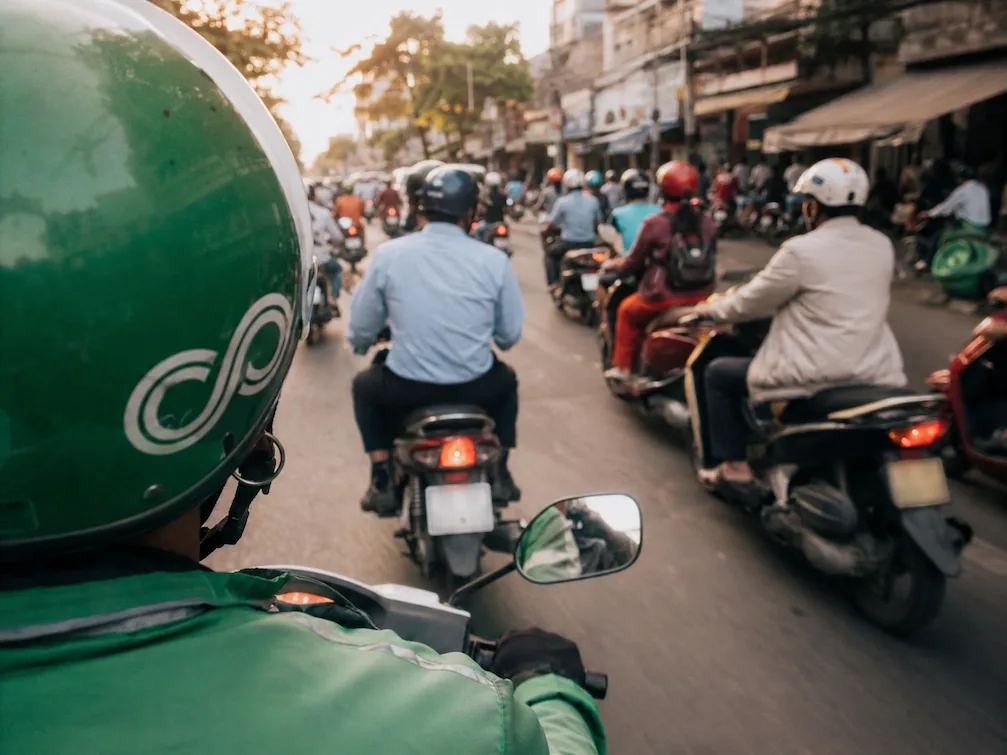
Skip the rental scooter until you’ve got your bearings. A stranger’s traffic is a bad classroom.
The system
Put Grab and Xanh SM on your phone
These two apps run the city. Grab does bikes and cars; Xanh SM is the newer electric fleet, and locals swear by both. You'll want a Vietnamese number to register. Bikes are quicker and cheaper in traffic; take a car for luggage or heavy rain. The fare shows before you confirm, so the price is the price.
Try Metro Line 1 once
The city's first metro line opened at the end of 2024, running from Ben Thanh in the center out through Thu Duc toward Suoi Tien, with stops near Thao Dien. It's clean, cold, and a genuine break from the heat. A bike still wins for most trips, but the riverside run is the calmest travel you'll find here.
Ride the bike, walk District 1
For anything short in the center, walk; District 1's core is flat and forgiving if you're brave at the crossings. Move at a steady pace and the motorbikes flow around you. For everything else, a GrabBike is the local default: fast, open-air, and cheap enough that you stop doing the math on every trip.
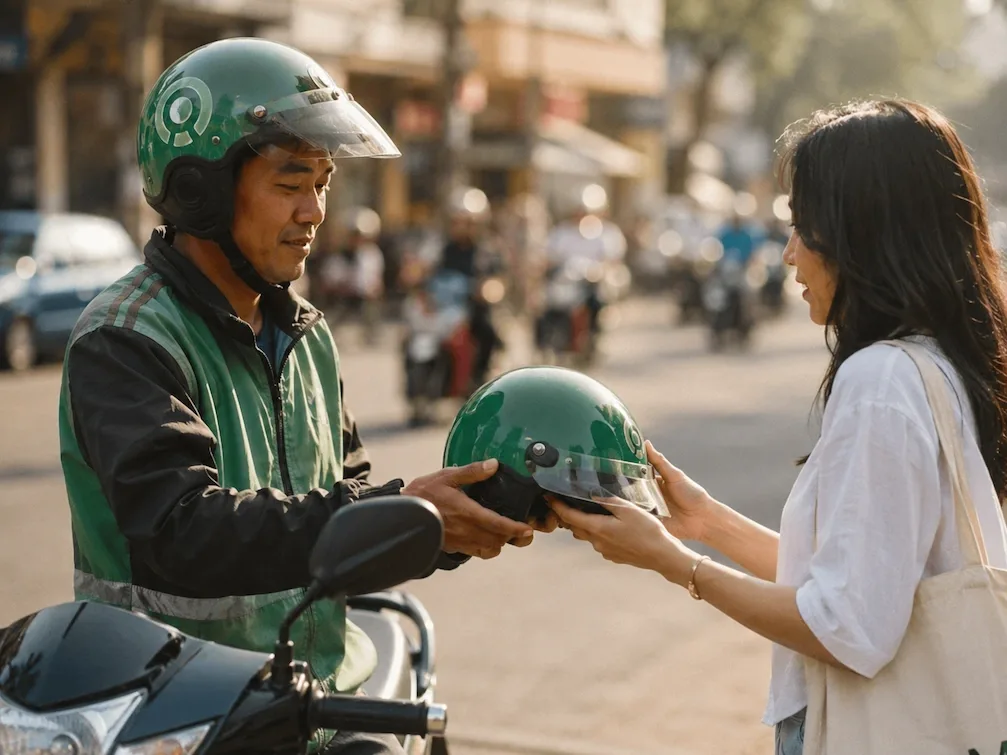
Hop on the back of a GrabBike and the city is suddenly twenty minutes wide.
Mistakes to avoid
Registering the ride apps on a foreign number
Grab, Xanh SM and Be verify a phone number when you sign up, and a foreign one often won't get the code. Set up an eSIM with a local Vietnamese number before you fly; after that the apps just work.
Renting a motorbike on day one
Saigon traffic has a logic, but learn it from the back of a GrabBike before you steer through it yourself; the licensing questions aren't worth it for a short stay anyway. Rent later, if at all, with better instincts.
Flinching at the crossings
District 1's core is flat and walkable if you keep a steady pace and let the motorbikes flow around you. Stopping short and darting is what gets you into trouble; move predictably and the traffic reads you.
Expecting the metro to cover the city
Metro Line 1 runs exactly one riverside route. Treat it as the calm way into the center, not a replacement for a GrabBike on most trips.
Common questions
Do I need a Vietnamese number for Grab?
Effectively yes. Grab, Xanh SM and Be all verify a phone number when you register, and a foreign one often won't receive the code. The easy fix is an eSIM that comes with a local Vietnamese number, set up before you fly. After that, booking rides here is as smooth as anywhere you've used them.
Is the metro worth using?
For the run it covers, yes. Metro Line 1 opened at the end of 2024, from Ben Thanh through Thu Duc with stops near Thao Dien, and it's clean, cold, and a real relief from the heat. It won't replace a GrabBike for most trips, but for the riverside route into the center it's easily the calmest way to travel. Tap a bank card straight at the gate.
Are the ride apps safe here?
Yes. Grab, Xanh SM and Be are the local default, and the fare shows before you confirm, so there is nothing to haggle and the trip is tracked on your phone. A GrabBike puts you on the back of a motorbike, which feels wilder than a car but is how the whole city moves; wear the helmet they hand you. Take a car for luggage, late nights, or heavy rain.
Should I rent a motorbike?
Not at first. Saigon traffic has a logic you pick up faster than you'd think, but a stranger's traffic is a bad classroom, and the paperwork and licensing questions aren't worth it for a short stay. A GrabBike gives you the open-air ride without the risk or the parking. If you still want to rent after a few weeks of watching how it flows, you'll do it with better instincts.