Part of: Paying in Brazil
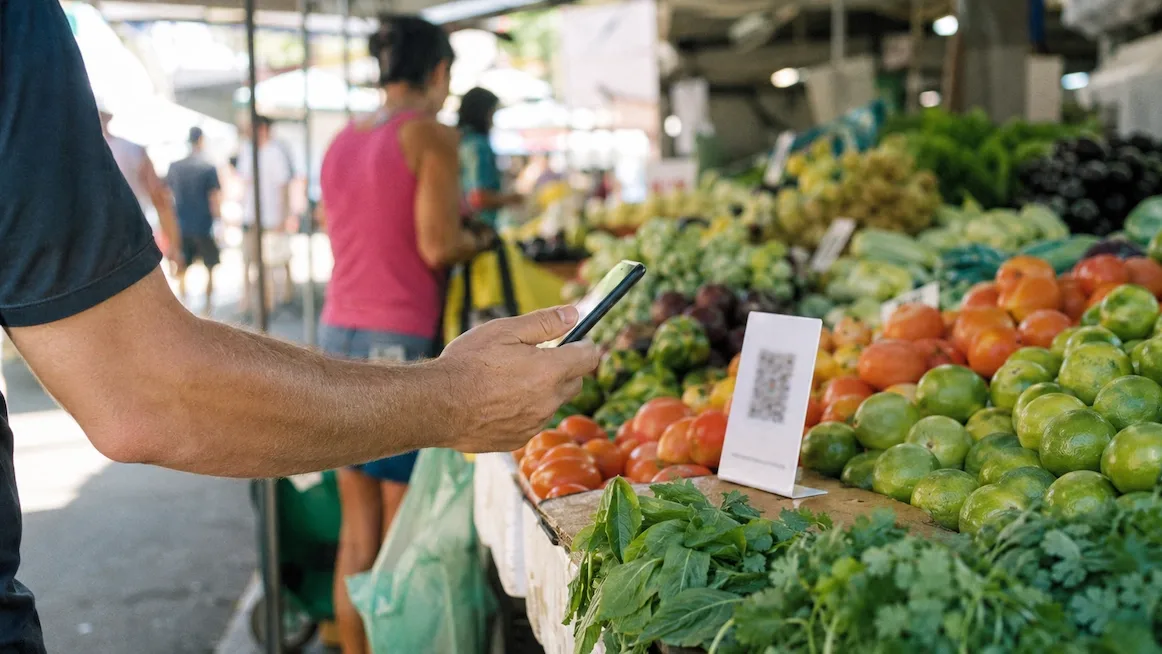
Paying in São Paulo is the easy part. Pix, the central bank’s instant QR system, took over the country faster than almost anywhere on earth, and by now it works at the market stall, the juice bar, the taxi. The problem for a traveler sits upstream, where your home card quietly takes its cut.
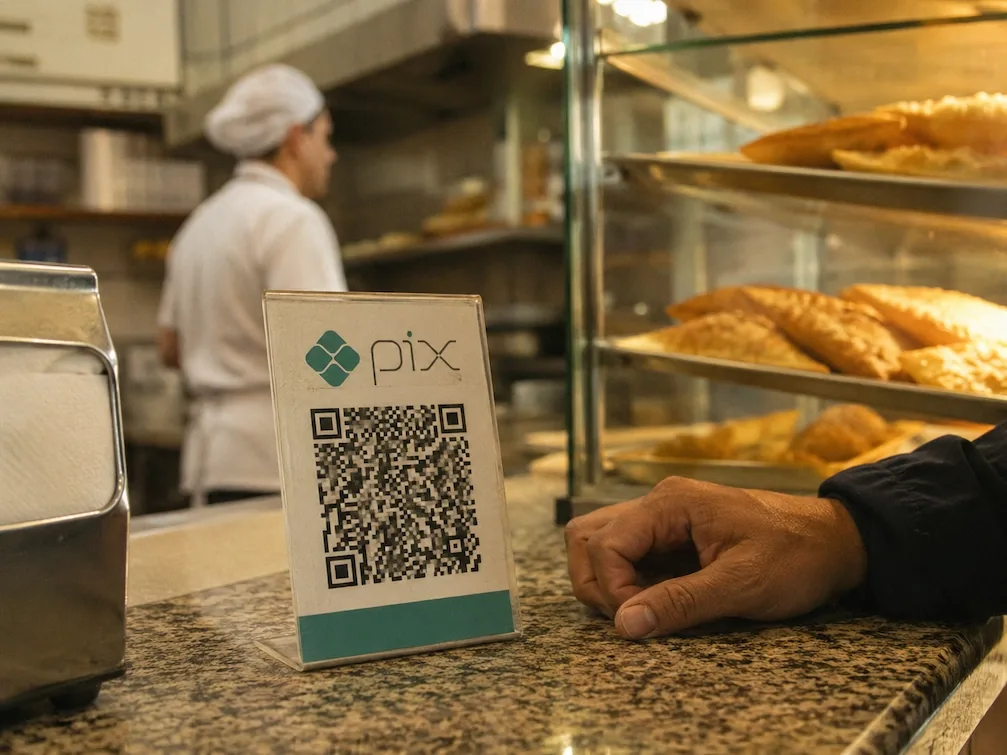
One thing to unlearn first: Brazil is not Argentina. There’s no parallel rate to chase and no exchange house worth hunting; cash earns you nothing extra either. Brazil runs one official rate, and Pix pays out at it, instantly and free, at any hour. What eats travelers is the card layer: the foreign-transaction markup, the conversion spread, and the terminal that offers to charge you ‘in dollars’ as a favor (decline it; always pay in reais). A cleverer exchange rate can’t fix that, because one doesn’t exist. What works is taking the card out of the middle and paying the QR at a fair rate.
Pay in three taps
Load up before you go
Top up stablecoins (USDC/USDT) in Yodl on your hotel wifi, not while a line forms behind you. You are not exchanging money at a booth or opening a Brazilian bank account; you are holding a balance that's ready to spend.
Scan and confirm in reais
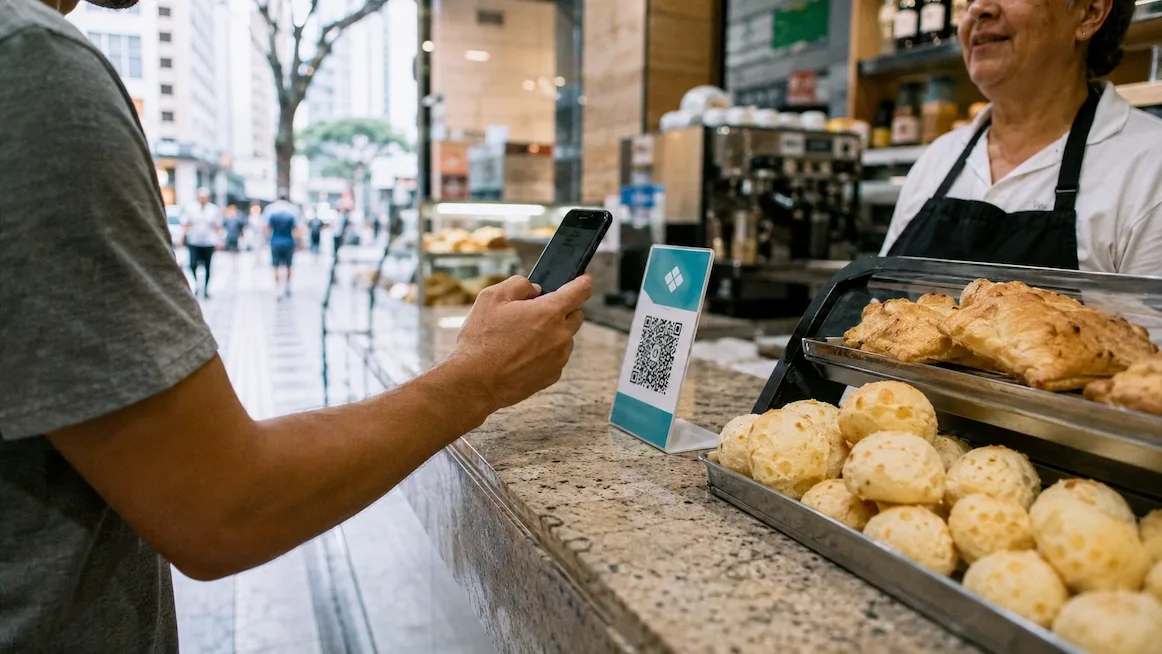
Ask for Pix, point the phone at the code, check the amount reads in reais (R$), and confirm. A licensed local company pays the shop on your behalf. No card ever goes into a machine.
They get the ping
The merchant's phone chimes within a couple of seconds, the same confirmation a Paulistano gets, and you're done. No signature, no receipt shuffle.
The mechanics matter less than the custody. Yodl is a wallet you control: the balance is yours, only you can move it, and each payment is confirmed on your phone before anything happens. There is no account application because there is no account. You hold money, you spend money, and the licensed partner handles the reais.
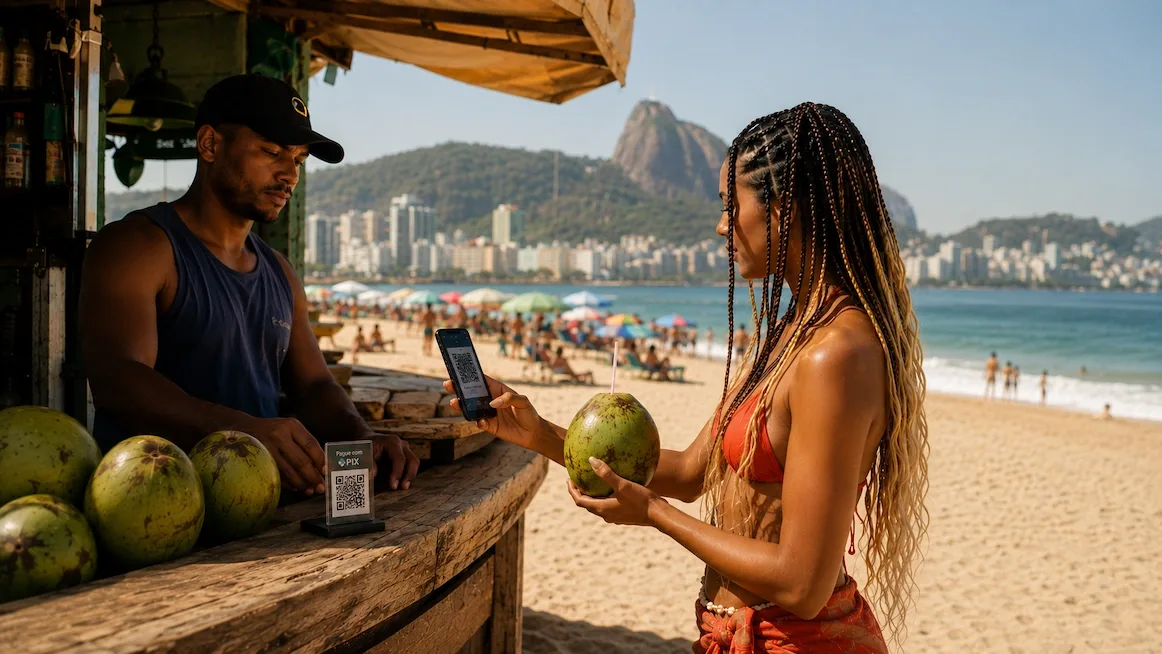
It helps to know how completely Pix owns daily life here. The bakery takes it, the street vendor takes it, the person selling beer out of a cooler at the park takes it. Brazilians split dinner bills with it at the table, in seconds, and plenty of small places have quietly stopped keeping change in the register. When you pay the same code they do, you’re using the system exactly as the central bank built it.
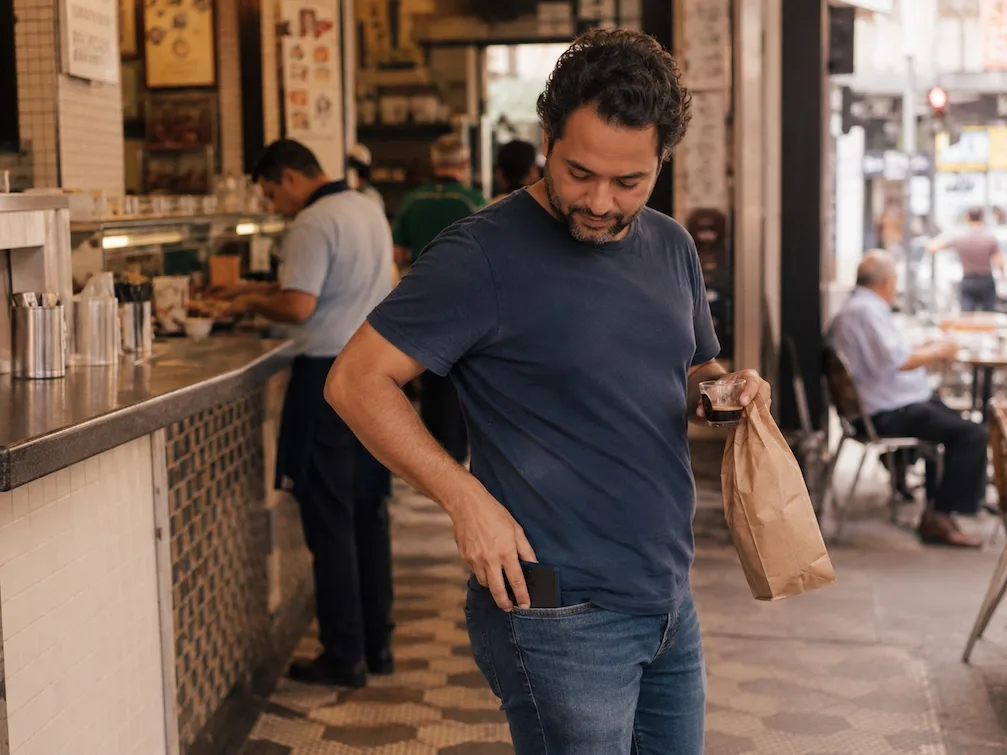
“Brazil has no secret rate to find. The win is keeping your bank out of the middle.”
Two habits cover the rest of the trip. First, when a card is unavoidable and the terminal offers to charge you in dollars, decline and pay in reais; the convenience of seeing your own currency is the product, and the markup is the price. Second, keep a little cash for the edges. A market stall or a beach vendor will still want paper now and then, and a few reais in your pocket cost nothing to carry.
What the card was costing you
The ledger below prices the same lunch both ways. The card version carries the foreign-transaction markup and the conversion spread; the Pix version is just the lunch. Nothing about the difference is dramatic on a single meal, which is exactly how the card version survives. Stretch it across a month of padarias, groceries and juice bars, and it adds up to real money.
A $50 lunch, two ways
Sample · verifyWhat a day costs
What a day costs
Sample · verify| Item | Cost |
|---|---|
| Coffee | — |
| Lunch | $50.00 |
| Dinner for two | — |
| Taxi across town | Cheap by big-city standards |
| Coworking day-pass | Cheap insurance |
Common questions
Can I use Pix without a Brazilian bank account?
Yes, with an app that pays the QR on your behalf. You hold your own money as stablecoins (USDC/USDT); when you scan, a licensed local company handles the reais side. You never open a Brazilian bank account.
Do I still need cash for anything?
A little. Pix has pushed paper money to the margins, but the margins still exist: a market stall, a beach vendor, the odd small place that quietly stopped keeping change. Carry a few reais for those and pay the Pix QR for everything with a register. You'll reach for cash less here than almost anywhere.
What happens the moment I scan?
You ask for Pix, point the phone at the code, check the amount reads in reais, and confirm. A licensed local company pays the shop on your behalf, and the merchant's phone chimes within a couple of seconds, the same confirmation any Paulistano gets. You never put a card in a machine or sign anything.
Who holds my money, the app or me?
You do. Yodl is a wallet you control: the balance is yours, only you can move it, and each payment is approved on your phone before anything happens. There's no account to apply for. Your side is the stablecoin balance; the licensed partner's side is the reais that reach the shop.